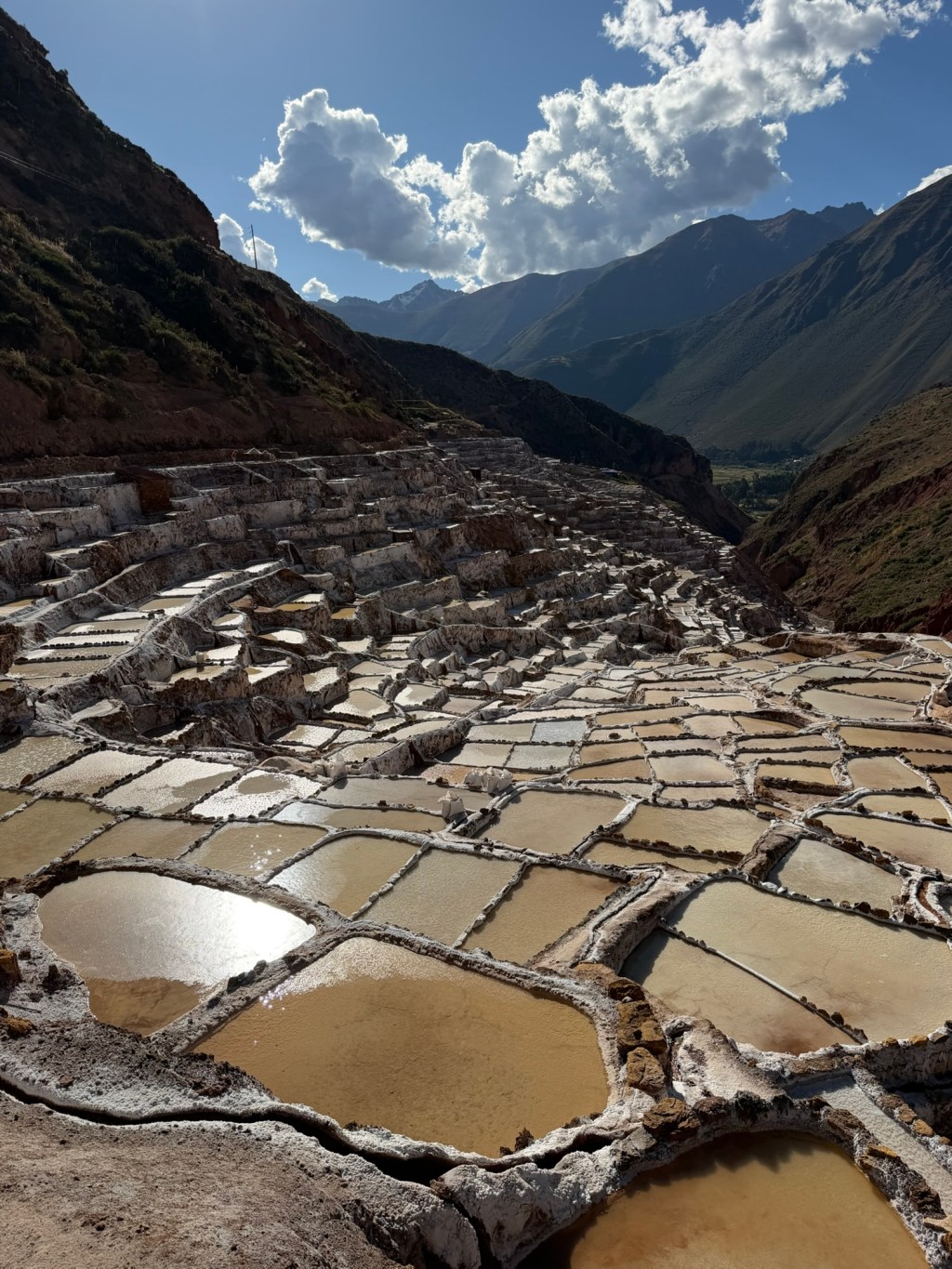
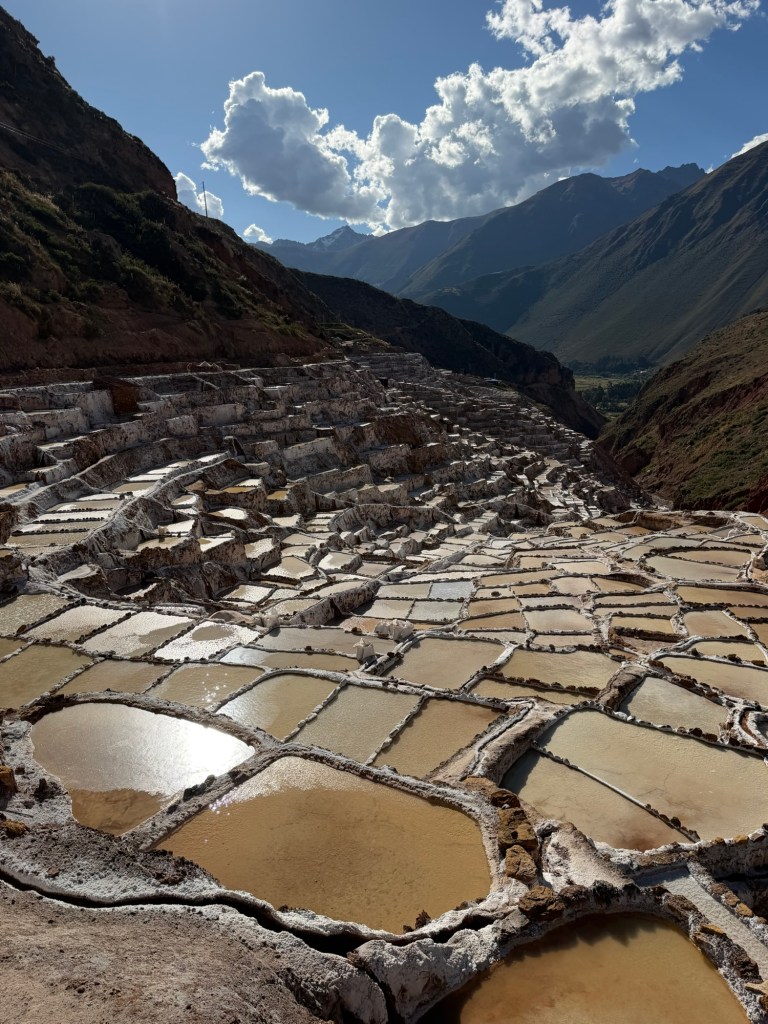
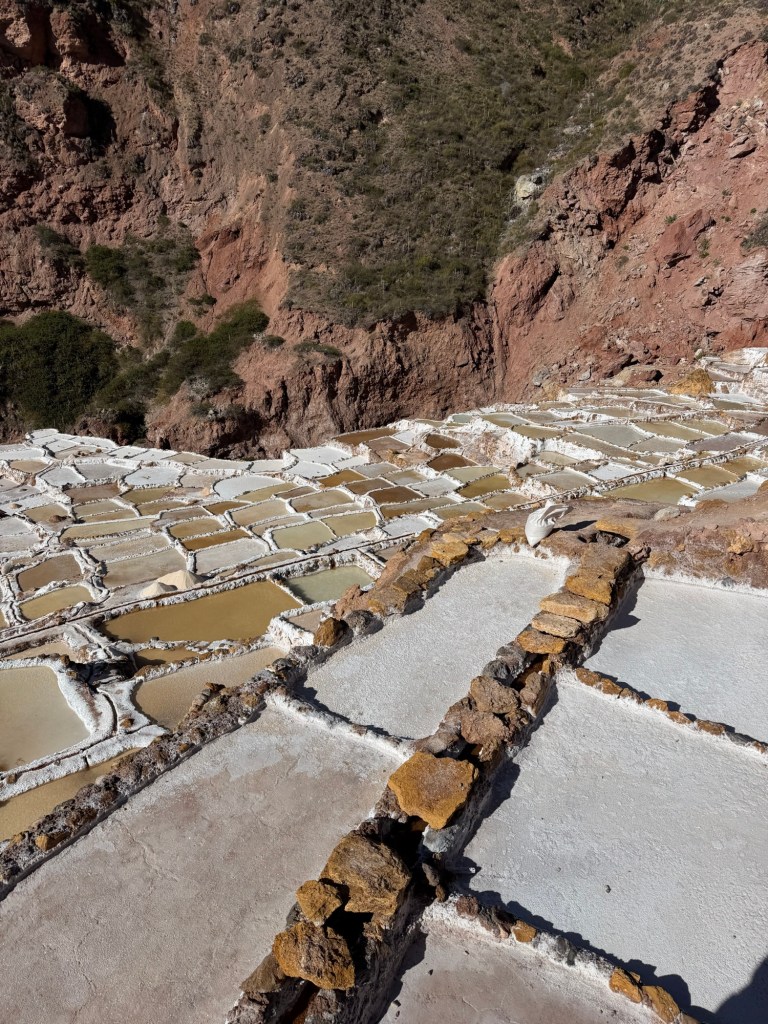
We rounded the corner high on the mountain and our guide told us to look out the window. We were staring at a patchwork quilt of whites and ecrus and beiges and tans and caramels and lattes stretching the length of the valley. It took a moment for me to understand what I was seeing. When our guide told us we were going to salt mines, I envisioned descending deep into the earth. And here we were on top of a mountain, at almost 11,000 feet above sea level.
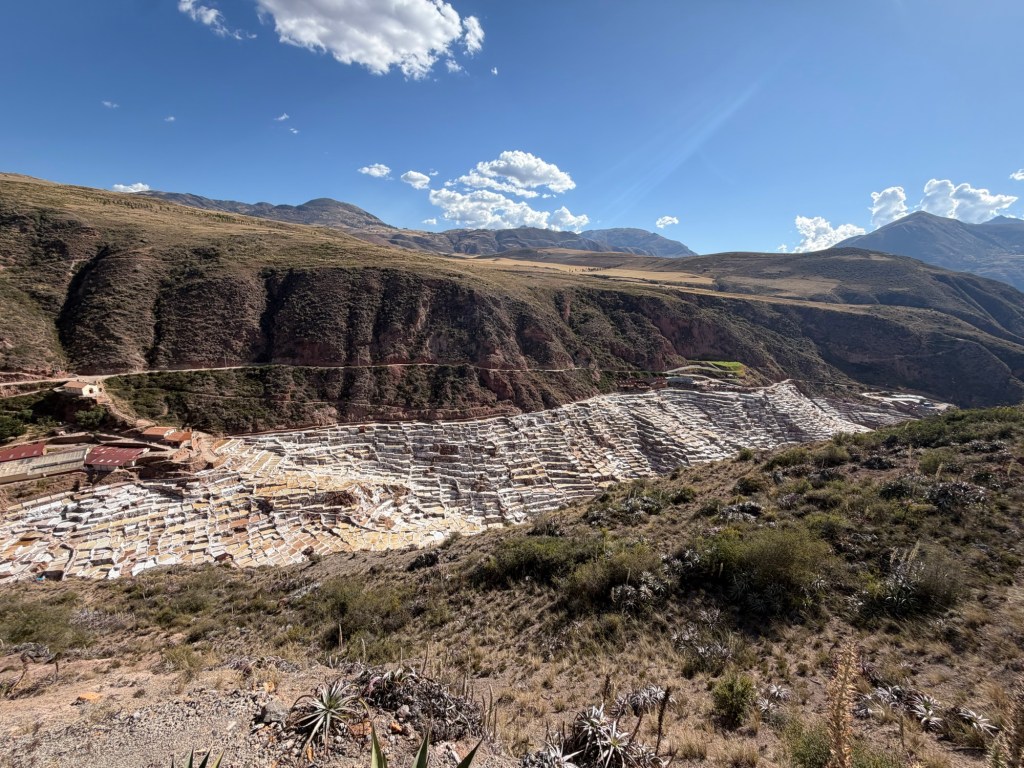
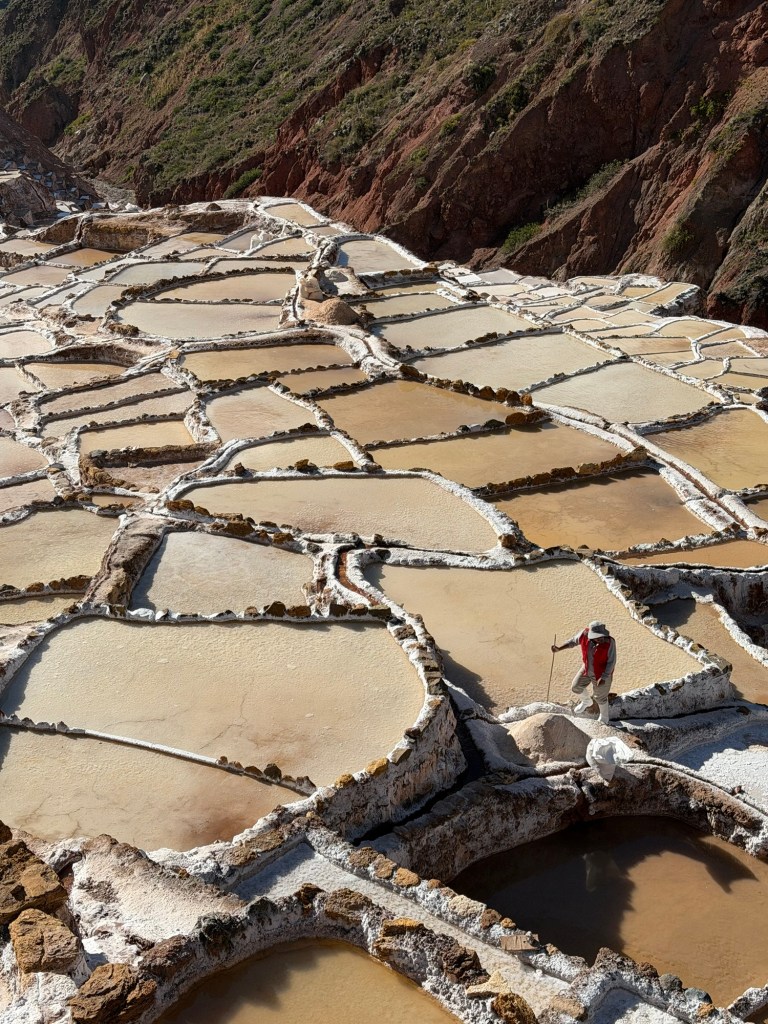
After a few more twists and turns we arrived at the entrance. Our guide explained there is a salt spring that originates inside the earth, and has been flowing for 3,000 years to this spot. People’s before the Incans created shallow natural pools filled by the spring. Once full, they blocked the flow of the water, and over time the sun evaporated the water, leaving three layers of salt: white salt on top, pink salt in the middle, and brown salt (inedible, used for medicinal reasons) on the bottom. Once harvested, they filled the pools again and started the cycle anew. The Incans added more pools, and in modern times even more pools have been added, though the harvesting process remains the same.
The mines are collectively owned by about 400 families. Only family members work the mines, still using wooden hammers and shovels to harvest the salts.
It was awe inspiring to view the beauty of the thousands of pools, and even more fascinating to learn that the harvesting process has changed minimally over thousands of years.


Leave a Reply