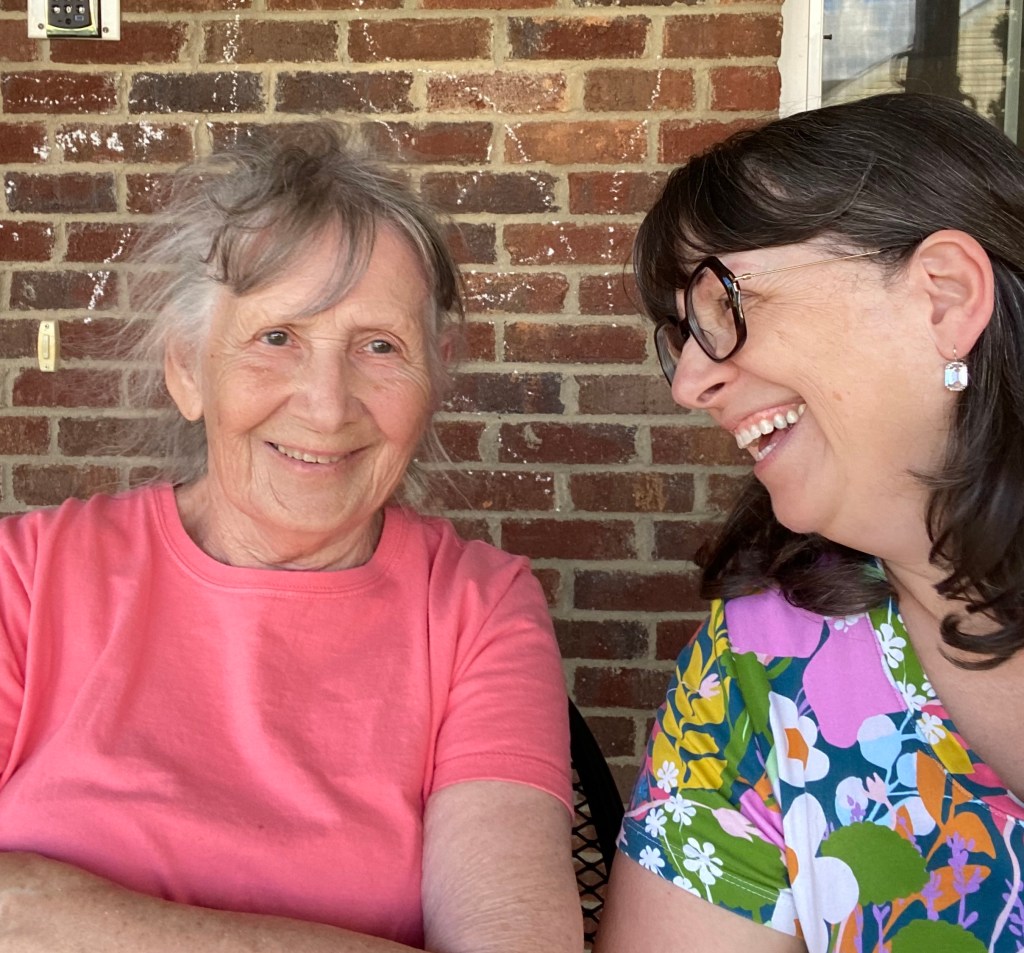
We sat outside, enjoying the crisp fall day. I brought the glass of ice tea to my lips, underestimating how full it was. Tea spilled onto my dress, beading in the folds. As I reached for my napkin, I felt Mom dabbing at the puddles with her folded cloth napkin, muttering, “It’s okay, it’s okay.” She was mothering me.
Category: Asheville Living
-
No comments on Mothering
-
I knew the day would come. I thought I had prepared for it. I thought I would accept it with grace. I thought wrong.
There was no glimmer of recognition when I visited Mom today. She wanted to go out, and I hoped that once we were in the car, and playing her favorite music, things would click into place. “You Are My Sunshine” played. She stared straight ahead. “I’ll Fly Away” came on. No reaction. No toe tapping, no humming along, no singing. “Amazing Grace” played and nothing changed. It’s hard to sing along when hot tears are running down your face. I tried, and I heard myself choking on the words.
We ate at our favorite Sunday spot. Up until now, I’ve been able to piece together the words and phrases she utters and carry on a somewhat coherent conversation. Today, nothing made sense. I nodded, and smiled, and said, “Oh, yes,” while I felt the gulf widen between us. I wanted to scream, “Come back! Don’t leave!” as I watched her retreat into her own world, blank eyes staring forward.
When we entered her residence, she walked towards one of the male residents, and kissed him gently on the cheek, and placed her hand on his neck. I knew this action. This was how she used to kiss Dad. I was both overcome by gratefulness that she still had someone to love (and be loved by), and a deep yearning for Dad, who I continue to miss dearly.
Even though I know it’s not likely, I continue to hope that there may be recognition on a future visit. With Dad, even as he was dying, he knew we were there. I didn’t realize how difficult it would be to physically be with someone, and yet not be with them, at the same time.
-
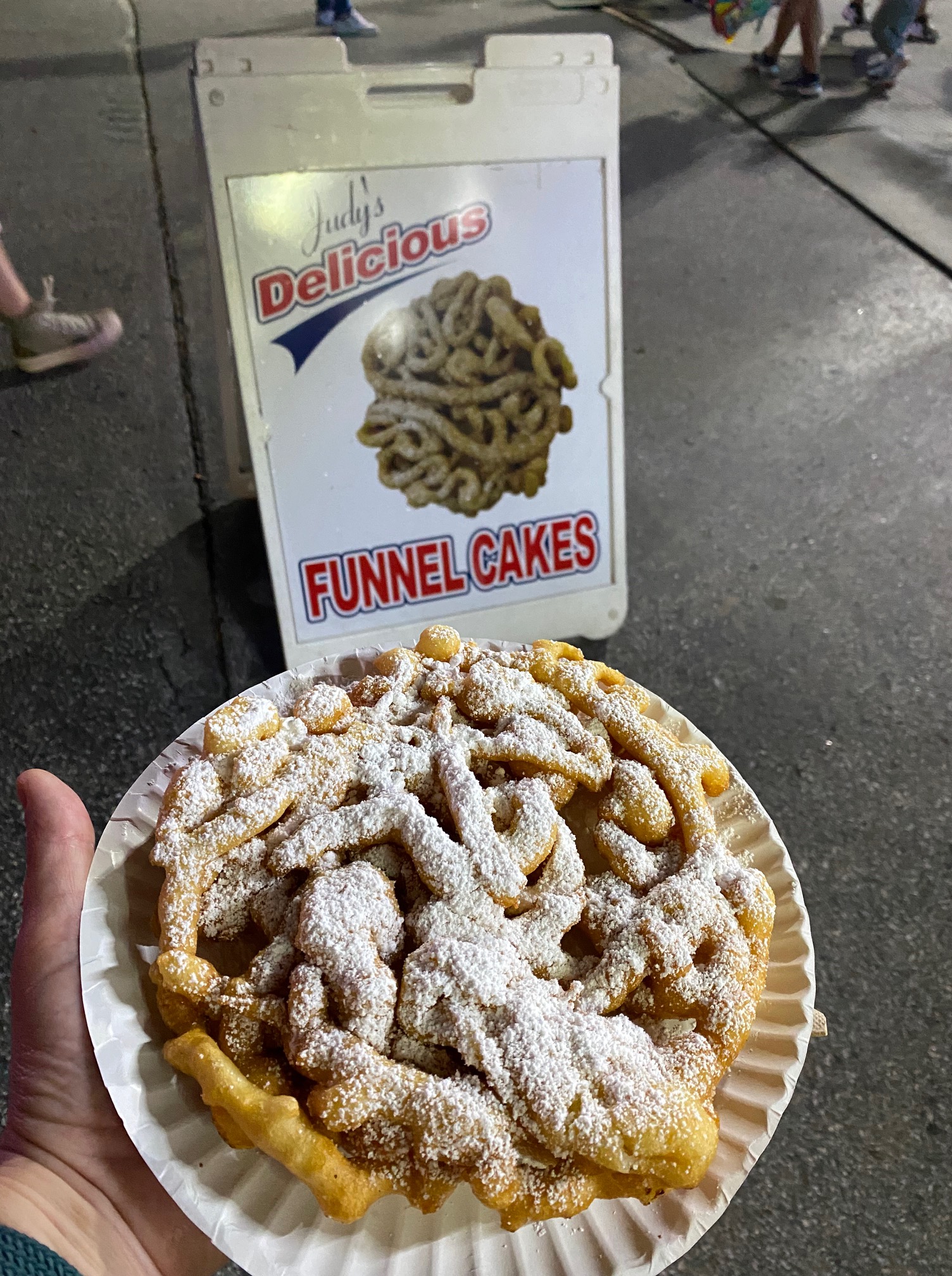
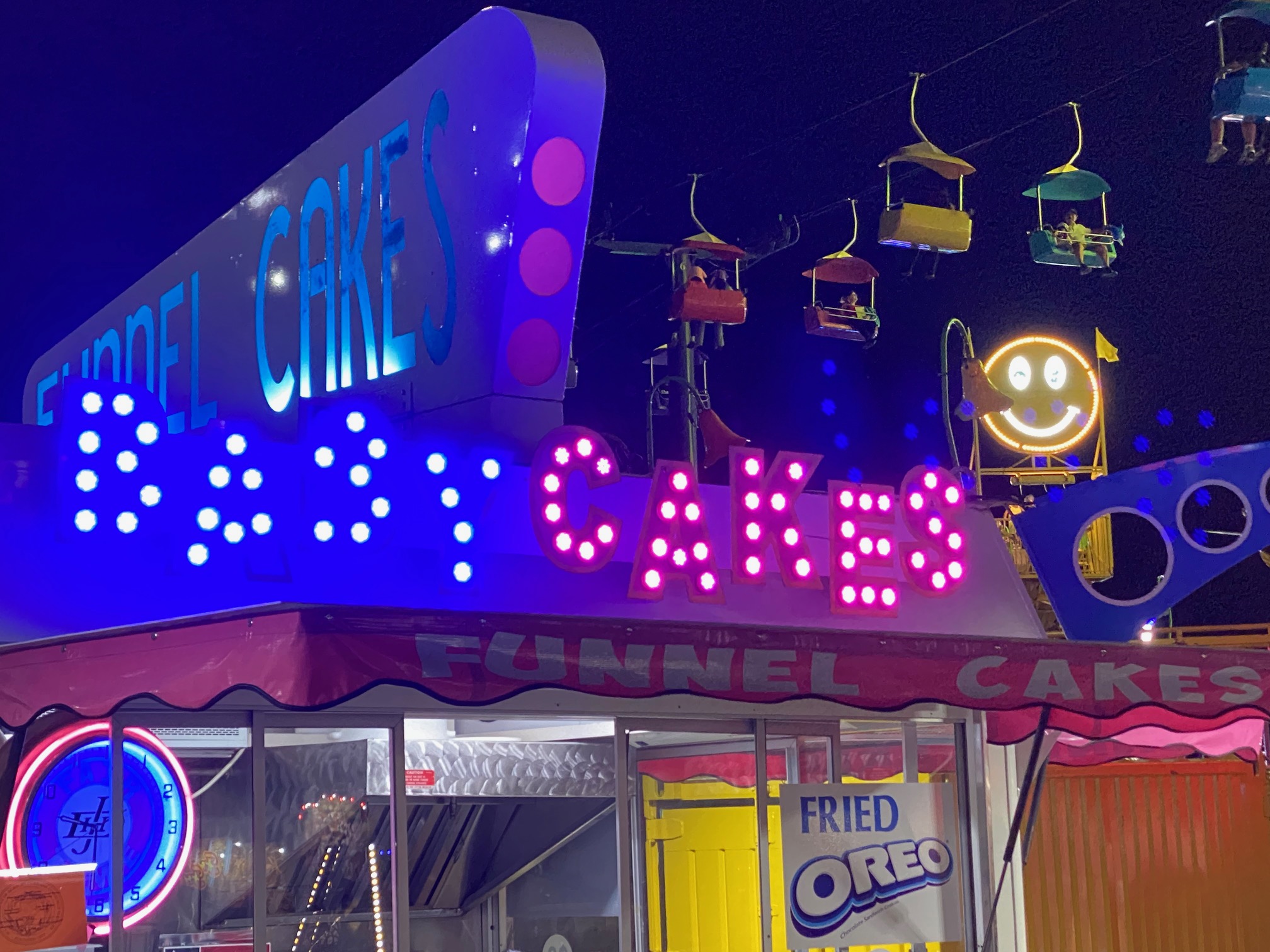
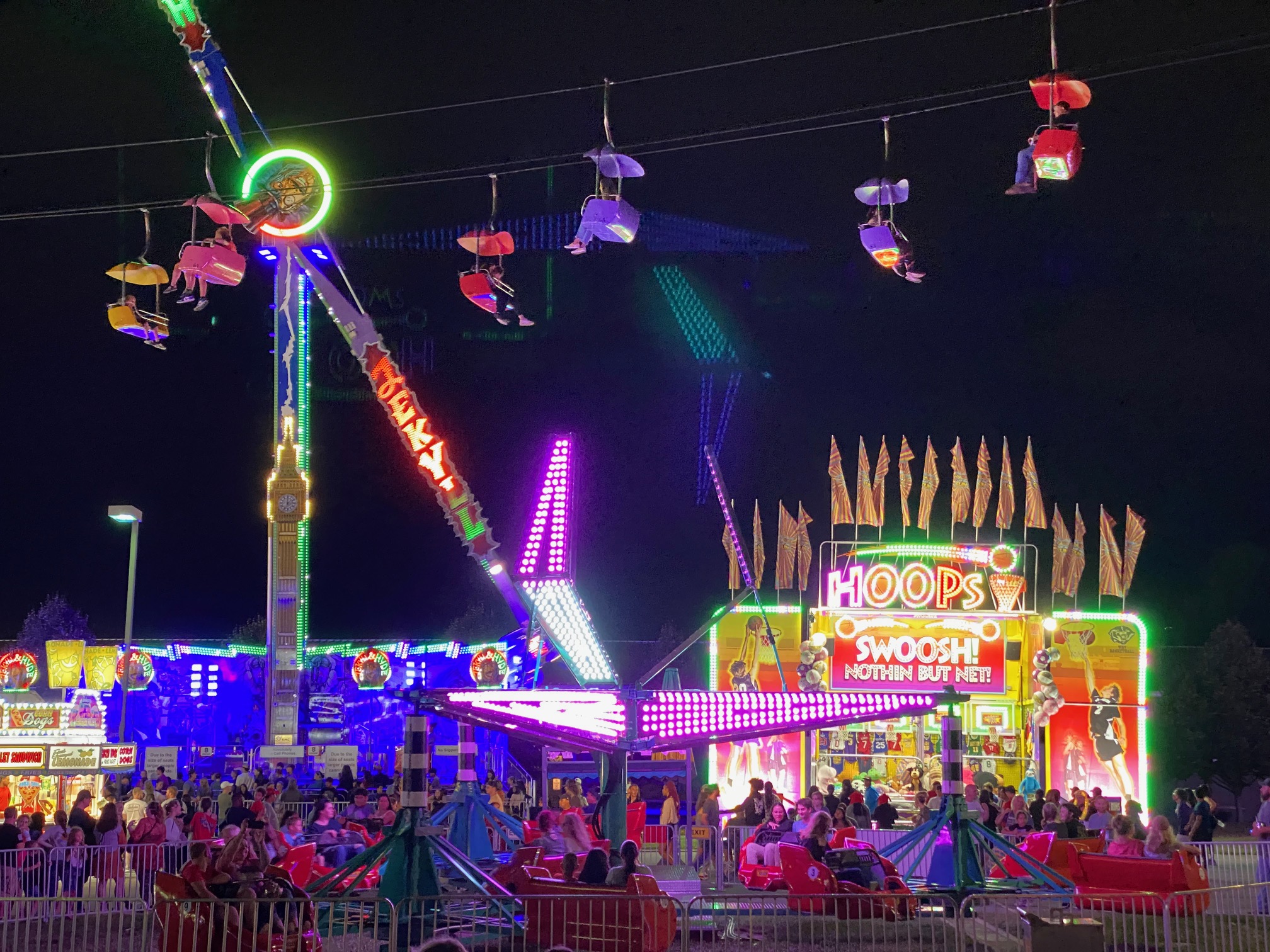
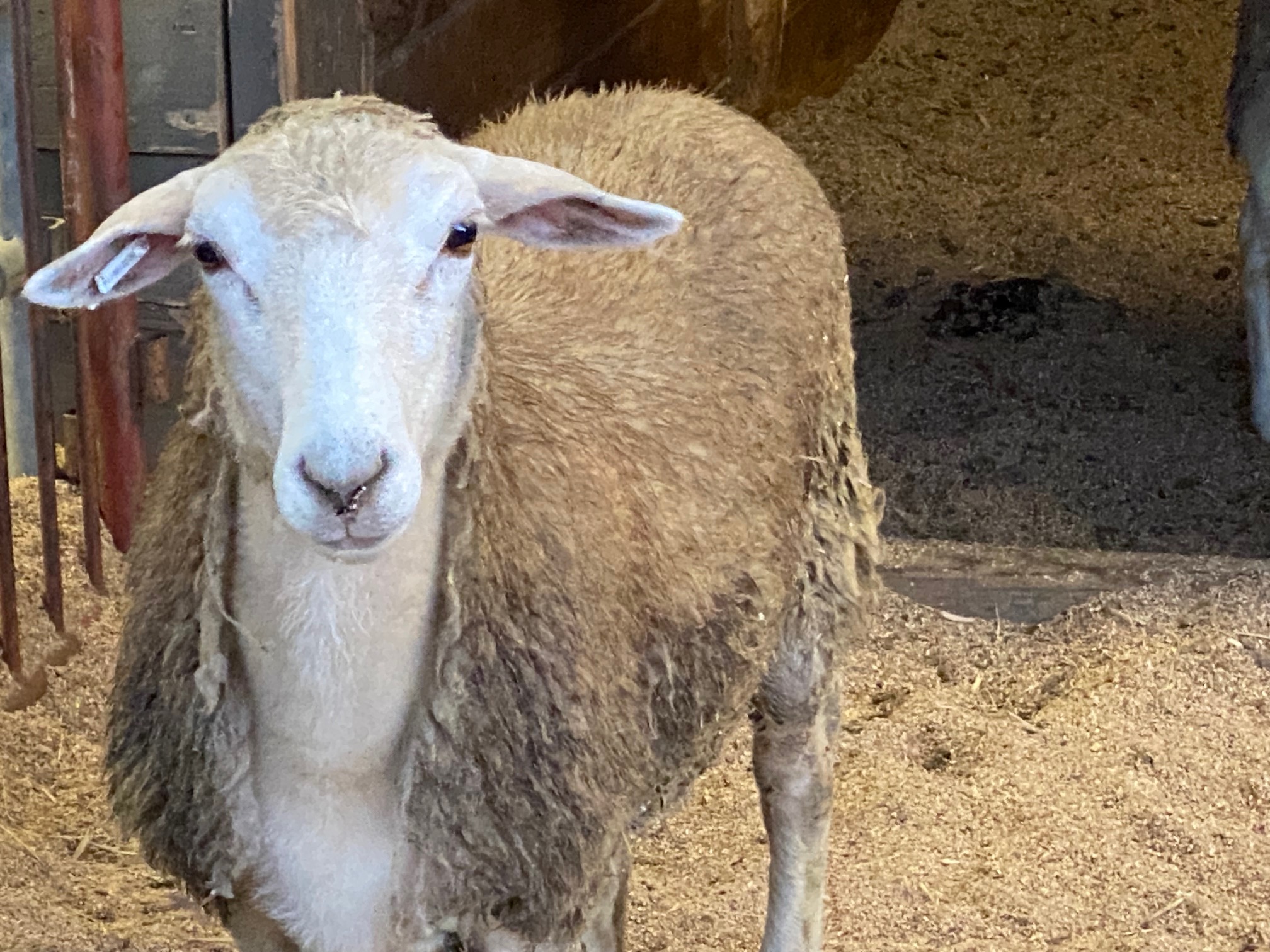
Impromptu outings are the best. Especially when they involve corn dogs, lemonade, funnel cakes, oversized vegetables, animals, and stomach-churning rides.
I thought I liked rides. I think maybe I like some of them. The swings that swung high above the ground at rapid speed were exhilarating. The buckets that swirled and spun and twisted and turned were fun (though a bit nausea inducing. Or maybe it was the corn dog.). The ferris wheel was terrifying.
I was confounded. Why was the seemingly tamest of rides the most fear inducing? I was higher than on any of the other rides, and the most still. It wasn’t a fast ride, it was one that slowly, ever so slowly, rotated, with regular stops for riders to get on and off. We were exposed – the only thing that was keeping us from tumbling to the ground (and to a horrible accident) was a stress-fractured bar (how seriously should I take those cracks?), hopefully locked in place by the nonchalant fair worker. I wanted to take pictures of the fair from above, the dazzling neon lights from high in the sky. I couldn’t open my purse, much less take out my phone, for fear of dropping it. I smiled, I laughed, I persevered.
And then the ride was over.


-
For the most part, I’ve been able to go with the flow when managing Mom’s Alzheimer’s. It doesn’t bother me to hear the same question, multiple times, in a short time period. It doesn’t bother me to answer the same question, multiple times. It doesn’t bother me to help her understand how to use a spoon. Or the toilet. It doesn’t bother me when she’s impatient to do the next thing.
At lunch, we were holding hands and playing a version of patty cake (she likes more physical touch these days), and she was mumbling words and phrases that didn’t make much sense, and I was nodding and saying “yes” and “um hm” and generally acting like I understood what she was trying to communicate, and out of the blue she said, “I don’t have any children.” I know it’s the disease speaking. I know that her life is confined to the present moment. And I felt a lump in my throat, and tears welling up in my eyes.
What more do we desire that to see, and be seen? To be recognized, and to be acknowledged. Daresay, to be loved?
I was determined not to cry. I nodded and said, “No?” And she shook her head. Then, looking into my eyes, she said, “I’m glad you’re here.”
-

I make such an effort not to assign judgment to our visits. I don’t want to value our visits as “good” or “bad.” I want to see them as what they are. Spending precious time together.
And it’s so hard to withhold judgment. Today was a good, no a great, visit. She recognized me (maybe) when I arrived. She hugged me and said, “I love you so much.” She cried a bit, somewhat shaken, then asked, “Can we go?” I checked that she had shoes on, her hair was (somewhat) brushed, and nodded yes.
We walked outside, and in the sun, she stood, eyes closed, arms outstretched, and said, “I just love this.” She teaches me perspective. I walk outside and feel the oppressive heat of the south in the summer, magnified by my entrance into menopause. She walks outside and feels freedom and the warmth of the sun. I place myself in her shoes.
I help her into the car and buckle her seatbelt. I connect my iPhone and then start the car. She hears the familiar chords of “You Are My Sunshine” and starts to tap her foot and utter sounds. They aren’t words, per se, but noises to accompany the lyrics. We hold hands as I drive 25 miles per hour around the windy roads to our favorite restaurant.
We’ve been coming here for a year and a half, once or twice a week. The staff know her and affectionately call her “Mama.” They kindly nod and smile when she utters non-sensical phrases and kiss them on the cheek. I almost cry (and sometimes I do) at their kindness.
We order the same thing every time we dine. Two half and half ice teas (half sweet, half unsweet), a burger, cooked medium well, no onions, sliced in half, and a house salad with ranch dressing. Rosemary fries. As we’re waiting, Mom grabs my hands and plays a version of patty-cakes in tune with the music playing on the speakers. I say, “We’re just having the best day,” and she confirms that yes, we are. I feel somewhat of a connection. I see a sparkle in her eyes. I am so grateful. There is a connection, however tenuous, between us.
She utters non-sensical phrases, and I nod my head and respond with non-committal phrases that seem to comfort her. “I don’t know when that will happen.” “I agree.” “I’ll be.” “Would you look at that.” For anyone overhearing our conversation, they would be confused. We don’t make sense. But to Mom, maybe we do.
-

We were finishing dinner, and heard the boom of fireworks. We walked towards the Omni Grove Park Inn, and stood in awe as display after display mesmerized us. A pickup truck pulled up beside us on the street. They set up chairs in the bed and watched the lights, oohing and aahing with each explosion. When it was over, they commented it was an appetizer for tomorrow’s show. I prefer to think of them as an amuse bouche, preparing our palate for what’s to come.

The Show 
The Finale 
The End -

“I must not have raised you right. Life is hard. The point of life is not to have fun, but to survive.” And then she hung up.
I was 22, recently graduated from college, and in the first few months of my first public school teaching job. It was so hard. I was determined to provide stimulating, interesting learning experiences for each of the twenty-six children in my third grade classroom in rural North Carolina. I stayed late after school preparing for the next day. I researched, I created sample craft projects, I made instruction sheets for activity centers. I listened to children cry, hurt by real or perceived slights. I noticed bruises and bandaged boo boos. I listened to praise (rarely) and complaints (often) from parents. One night I was overwhelmed by the difficulty of it all. I called my Mom, in tears, saying I just hadn’t realized how hard it would be. Her response? “I must not have raised you right. Life is hard. The point of life is not to have fun, but to survive.” And then she hung up. My roommates were standing nearby, wide-eyed, wondering why I had chosen to call my Mom, of all people.
I think about that call a lot, Mom. I try so hard to cultivate moments of joy. And I believe you want those moments of joy, too, regardless of what you once told me.
Joy has taken different forms over the past year. At first, it was:
- Long walks in the park, commenting on the birds, and the flowers, and the sky
- Then, walking much shorter distances at the mall, sometimes stopping to purchase something bright and shiny
- Then, going out to eat, chicken fingers and fries on Saturday, and pizza on Sunday, asking to sit in the same waitress’ sections because they know how you like your hot tea prepared
- Now, going for drives, without you having the will to eat or the energy to walk
You stare straight forward, eyes half-closed, not seeing. I drive, left hand on the steering wheel, right hand holding yours, our fingers intertwined resting on the corduroy wales of your pants. You absentmindedly trace my fingers, up and down, up and down, not looking, back and forth, back and forth. Every so often I glance to my right, seeing if you’re still awake (you are), seeing if there’s any glimmer of recognition (there isn’t). I play the same playlist every time we get into the car. Occasionally, your fingers will play out the notes on my hand as if you’re playing the piano, or your toes will tap along to the rhythm. After You Are My Sunshine, Amazing Grace, and Take Me Home, Country Roads, you’ll say, “that one, good.” I press the rewind button so that we can hear your favorites again. Sometimes I’ll hear you humming along, or even singing one or two words, small and tinny. I smile and choke back tears.
We have a few routes we drive on, all on windy roads where the maximum speed is 35 mph. You want to be outside, not inside. It doesn’t matter if we talk (we rarely do), or if we drive the same route (we often do). You seem content to simply be.
It turns out, you were right after all. Life can be hard.
-

Daffodils take me back to my five-year-old self, when I picked the flowers for my kindergarten teacher from my Mom’s carefully tended beds, wrapped the stalks with a dripping wet paper towel, then crumpled aluminum foil around the stalks as a makeshift vase til I could get them to school and proudly thrust them at my teacher.
Mom loved her beds of bright yellow daffodils and deep purple hyacinths. I loved watching the plants sprout through layers of pine needles, sometimes through remains of snow, and made bets with myself guessing how long it would be before the buds blossomed. I never was right, though I told myself I was.
I love that daffodils have such a scant smell. A sweet one, though. One of memories. One of winter ending and spring just arriving. One of happiness and joy to come.

-
The crying is more intense, yet shorter in duration. Once Mom recognizes me as me, she starts shaking and crying, sobbing, “My baby, my baby.” I hug her and hold her tight and murmur, “It’s okay, Mom, it’s okay.” This display of emotion lasts for about 30 seconds, and then she pulls back, her hazel eyes staring up into my brown ones, her gripping my shoulders, and very seriously she says, “Is it okay? Can we go?” I nod and she says, “Really? Really?” I nod again. Her whole demeanor changes when we’re getting ready to go out (which at this time of the year involves two layers of pants, three layers of tops, a heavy coat, scarf, hat, mittens and earmuffs). She is transformed from a zombie, wandering around aimlessly and staring into space, to an excited 81 year old lady. Conflicting emotions arise in me, all of which are true, all at once. I love seeing her happy, even if just for a brief moment. I wonder (again. Again, again, and again.) if I made the right decision to move her to a facility. Guilt, over the times I’m not there. Thankful for the time we can spend together.
It’s Christmas Eve and all of our regular restaurants are closed. We go to a hip restaurant downtown. As we sit down, I notice how busy it is and make the decision to order an easy appetizer, hummus, so that Mom has something to snack on while our sandwiches are being prepared. Mom is not patient. As soon as we get settled, and she wants to know where our food is. Thankfully, the hummus arrives quickly. The waitress places it in the middle of the table and gives each of us a share plate. Mom pushes the share plate to the side, pulls the hummus platter towards her, and asks me if I’m going to eat. I can only laugh. I tell her my food is coming as she snacks on celery and carrots and pita and hummus. The waitress eyes us quizzically as she sees the platter in front of Mom, but doesn’t say anything. Again, all the conflicting emotions are all true, all at once. Thankful that we are here together. Bemused that she’s forgotten the concept of sharing. Sad that I am now the caretaker and she is the care-ee. Anxious wondering how many more of these moments we’ll have together. And grateful, oh so grateful.
-

I only knew him for eight months, and yet it felt like a lifetime. He lived across the hall from Mom. He and Mom immediately took a liking to each other. When I arrived to visit, they would be sitting in the living room area, cuddled close, holding hands. The first few visits, I wasn’t sure whether to simply leave, and not disturb them (they seemed so happy together), or engage with both of them.
I would sit with both of them until Mom said she was ready to leave, and we would traipse on our adventure. Sometimes she expected him to come with us, and I would gently explain that he would stay at the facility, and we would head out. I looked forward to seeing him each time I arrived. I asked him how he was doing, and what a highlight of the day was. When I arrived during meal times, it warmed my heart to walk in on he and Mom holding hands at the dinner table.
I arrived today and his door was closed.
As I walked towards Mom’s room, a staff member let me know he passed earlier this morning. Tears sprang to my eyes, a lump settled in my throat, and I felt heavy all over. I shouldn’t have been surprised. This is the next step at these facilities. And, yet.
Mom and I went to the park. We walked, we sat on benches. We didn’t speak. As we sat, we held hands, and we each cried. I asked Mom if she was sad, and as tears rans down her face, she said, “No.” I squeezed her hand and even though I didn’t voice it, I acknowledged I was sad. So very, very sad. Sad for the loss of the person who I had looked forward to visiting as much as Mom. Sad for his daughters, knowing what it feels like to lose a father. Sad for Mom, who even if she can’t verbalize it, will miss sitting with him and holding hands. And sad for me, knowing that a similar loss is in my future.